A successful sales campaign involves more than offering attractive discounts and increasing your advertising budget. Your website needs to be ready to receive visitors, communicate your offer clearly, and turn that interest into meaningful business results.
For many businesses, website preparation begins when a sales event is already approaching. Landing pages need to be created, promotional banners need updating, and unexpected technical problems suddenly become urgent. By the time everything is published, there may be little opportunity to test whether the changes actually work.
This approach creates unnecessary pressure, but more importantly, it can limit the effectiveness of the entire campaign.
Whether you’re preparing for Black Friday, a seasonal promotion, a product launch, or a service-based sales campaign, your website should be part of the planning process from the beginning.
Let’s explore how early preparation can improve your website’s performance, strengthen customer confidence, and help your business make better use of every visitor.
Why Website Preparation Matters Before a Sales Campaign
Your website is often the central destination for a sales campaign. Advertising, email marketing, social media, and organic search may bring people to your business, but the website itself is responsible for helping those visitors take the next step.
If a potential customer encounters a slow page, confusing navigation, unclear pricing, or a complicated checkout process, additional advertising investment may not solve the problem.
This is particularly relevant in the European market, where online purchasing is already a regular part of consumer behaviour.
According to Eurostat’s Digitalisation in Europe 2026 report, 78% of EU residents aged 16 to 74 bought or ordered goods or services online during 2025, compared with 62% in 2015.
The growth of online shopping creates opportunities for businesses, but it also means that customers have extensive experience comparing websites, evaluating offers, and completing online transactions.
The Cost of Preparing Too Late
Imagine an online store planning a significant seasonal promotion.
Two weeks before the campaign, the business requests a new landing page, promotional pricing, additional payment options, and changes to the checkout experience.
Individually, these requests may seem manageable. Together, however, they introduce design, development, integration, and testing requirements that need to be coordinated.
The landing page might depend on product availability. Promotional pricing needs to work correctly with discount rules. Payment methods require testing, while analytics must accurately record purchases.
Completing everything immediately before launch leaves little opportunity to identify problems or improve the customer experience.
Starting earlier allows businesses to make informed decisions rather than relying on rushed implementation.
Build Your Campaign Around a Clear Website Strategy
Before designing promotional graphics or creating advertisements, establish what the campaign is expected to achieve.
An online retailer may want to increase purchases of a particular product category. A service business might focus on generating qualified enquiries, while a B2B company could use a campaign to encourage consultation bookings.
These objectives require different website experiences.
Create Landing Pages That Support the Campaign
Sending every campaign visitor to your homepage is rarely the most effective approach.
A dedicated landing page provides a focused experience that connects the advertisement, email, or search result with the visitor’s expectations.
The page should communicate the offer immediately, explain its value, and make the next action obvious.
For an e-commerce business, this may involve promotional product collections, clear availability information, and a straightforward purchasing process.
For a service business, it could mean explaining the service, presenting relevant work, addressing common concerns, and providing an accessible enquiry form.
Good conversion rate optimization begins with reducing unnecessary decisions. Every section of the page should help visitors understand the offer or move confidently towards the intended action.

Prepare Website Content and Campaign Messaging Together
A common mistake is treating website content as something that can be completed after the visual design.
In practice, content influences the layout, page structure, calls to action, and information hierarchy.
If your campaign promises faster delivery, a simplified service package, or a limited promotional offer, the landing page needs to explain those conditions clearly.
Preparing the content early also gives your designer or developer time to create a layout around the actual message, rather than adapting finished designs to accommodate information added at the last moment.
Give Search Engines Time to Discover Your Content
Search engine optimization can support seasonal campaigns, but it should not be treated as an immediate solution for generating traffic.
Publishing a landing page shortly before a promotional event does not guarantee that it will appear prominently in relevant search results.
Google explains in its official crawling and indexing documentation that recrawling can take anywhere from several days to several weeks. Requesting indexing also does not guarantee immediate inclusion in search results.
Even after indexing, competitive search visibility depends on numerous factors, including content relevance, existing website authority, and search demand.
Focus on Useful, Long-Term Search Content
Rather than creating temporary pages exclusively for a short sales period, consider developing useful content that remains relevant throughout the year.
An online furniture store could maintain buying guides, product comparison pages, and category information that support customers before seasonal promotions begin.
A company selling professional services might publish educational articles addressing common business problems, helping potential clients understand when a particular service is appropriate.
These resources can be improved over time and linked naturally to relevant campaign pages.
The objective is to establish useful content before promotional activity begins, rather than expecting last-minute changes to generate immediate organic traffic.
Optimize Website Performance Before Traffic Increases
A website that performs adequately during normal business activity may reveal weaknesses when a campaign attracts additional visitors.
Large images, excessive scripts, poorly configured caching, and inefficient integrations can affect page loading and responsiveness.
This becomes especially important when visitors arrive from mobile advertisements or email campaigns.
Understand Core Web Vitals
Google’s Core Web Vitals measure important aspects of the browsing experience.
Largest Contentful Paint evaluates how quickly the main content becomes visible. Interaction to Next Paint measures how responsive the website feels when users interact with it. Cumulative Layout Shift measures unexpected movement of visual elements.
According to Google’s Web Vitals documentation, the recommended good-performance thresholds are 2.5 seconds or less for Largest Contentful Paint, 200 milliseconds or less for Interaction to Next Paint, and 0.1 or less for Cumulative Layout Shift.
These metrics are not direct guarantees of higher sales, but they provide useful technical indicators of the customer experience.
A promotional page should remain responsive when visitors open product details, select variations, submit forms, or add items to their baskets.
Test the Complete Customer Journey
Performance testing should extend beyond the homepage.
For e-commerce websites, product pages, promotional categories, cart functionality, payment processing, and order confirmation all deserve attention.
On WordPress and WooCommerce websites, promotional plugins and custom discount rules can introduce compatibility issues with caching, payment gateways, or other extensions.
Service businesses should test their contact forms, booking systems, email notifications, and CRM integrations.
The goal is not simply to confirm that individual pages load correctly. It is to ensure that the complete journey works reliably from the visitor’s first interaction to the final conversion.
Use Analytics and Testing to Improve Conversions
Website analytics becomes considerably more useful when it is configured before a campaign launches.
Without reliable measurement, businesses may know how many visitors arrived but struggle to understand what those visitors actually did.
For example, high traffic combined with low sales does not automatically mean that the campaign attracted the wrong audience.
The difficulty might occur on product pages, during checkout, or when customers discover unexpected delivery costs.
Measure Meaningful Actions
Your measurement strategy should reflect the business objective.
An online store should understand how visitors move from product discovery through cart activity and purchasing.
A service website might measure enquiry submissions, consultation bookings, or other qualified conversion events.
Tools such as Google Analytics 4 can provide insight into these interactions, provided events are configured and validated correctly.
For businesses serving European customers, analytics implementation must also account for privacy requirements and user consent.
Google’s guidance on consent settings for European Economic Area users explains the consent signals required for certain advertising and measurement functionality.
These considerations should be included during implementation, not introduced after the campaign starts.
Test Changes Before Making Assumptions
Once measurement is working, businesses can evaluate whether changes improve the experience.
A landing page might benefit from a clearer headline, different product imagery, or a more visible call to action.
A checkout form may perform better when unnecessary fields are removed or delivery information is explained earlier.
A/B testing can help compare alternatives, but reliable conclusions require appropriate traffic volumes, a defined primary metric, and sufficient observation time.
For smaller websites, direct usability testing and careful analysis of conversion journeys may be more practical than running experiments that cannot collect enough data.

Consider European Consumer Requirements When Planning Promotions
Businesses selling to EU consumers need to consider more than website design and promotional messaging.
Consumer protection and privacy requirements can directly influence how a campaign is developed and presented.
Display Promotional Prices Correctly
For consumer goods, EU price indication rules generally require traders announcing price reductions to identify the lowest price applied during at least the previous 30 days, subject to specific exceptions and national implementing rules.
This means a promotional price should not simply be compared against an arbitrary or temporarily increased reference price.
The European Commission’s consumer pricing guidance explains the requirement.
The importance of correct implementation is reinforced by a March 2026 European Commission investigation, which found that 30% of 314 checked online traders referenced discounts incorrectly.
For businesses using WooCommerce or another e-commerce platform, displaying compliant promotional information may require appropriate pricing history and additional functionality.
Account for Privacy and Accessibility
Campaign tracking, remarketing, and marketing cookies must be configured in accordance with applicable European privacy requirements.
Cookie consent should be addressed through an appropriate implementation rather than assuming that installing an analytics plugin automatically makes tracking compliant.
Accessibility also deserves consideration. Promotional messaging, forms, navigation, and purchasing interfaces should remain usable for people with different abilities and assistive technologies.
This improves the quality of the website experience and helps businesses address applicable accessibility obligations.
Preparing these elements in advance reduces the risk of discovering important technical or compliance problems during a campaign.
Develop a Realistic Website Preparation Timeline
The amount of preparation required depends on the size and complexity of the campaign.
A straightforward promotional banner may require relatively little development work. A seasonal campaign involving new landing pages, custom discount logic, integrations, and detailed conversion tracking requires considerably more planning.
For substantial campaigns, an eight-to-twelve-week preparation period can provide a useful starting point, although this is a planning recommendation rather than a universal requirement.
Eight to Twelve Weeks Before Launch
Begin by defining the campaign objective, target audience, promotional offer, and budget.
Review the existing website to identify technical limitations, outdated content, and potential improvements to the visitor journey.
This is also the appropriate stage to discuss requirements with your web designer or developer, particularly when the campaign depends on new functionality.
Four to Eight Weeks Before Launch
Develop the landing pages and supporting content, configure promotional functionality, and prepare the necessary integrations.
Review the website on mobile and desktop devices, paying attention to page loading, navigation, and form usability.
Analytics should already be collecting the information needed to establish a useful baseline.
Any planned search-focused content should be published as early as practical.
The Final Weeks Before Launch
The final stage should focus on validation rather than major development.
Complete checkout tests, confirm pricing and availability, review forms and notifications, and verify that campaign tracking works correctly.
If paid advertising will generate substantial additional traffic, consider whether your hosting infrastructure and external integrations can handle the expected demand.
Once the campaign begins, monitor technical errors and customer behaviour, making controlled adjustments when necessary.
This approach protects the launch date while preserving opportunities for improvement.
Treat Your Website as an Ongoing Business Investment
Preparing for a sales campaign should not mean rebuilding your website every time your business launches a promotion.
A well-maintained website provides a stronger foundation for future activity.
Regular improvements to performance, content, integrations, and usability make individual campaigns easier to implement.
For WordPress websites, this includes managing updates responsibly, reviewing plugin compatibility, monitoring errors, and ensuring that custom functionality remains reliable.
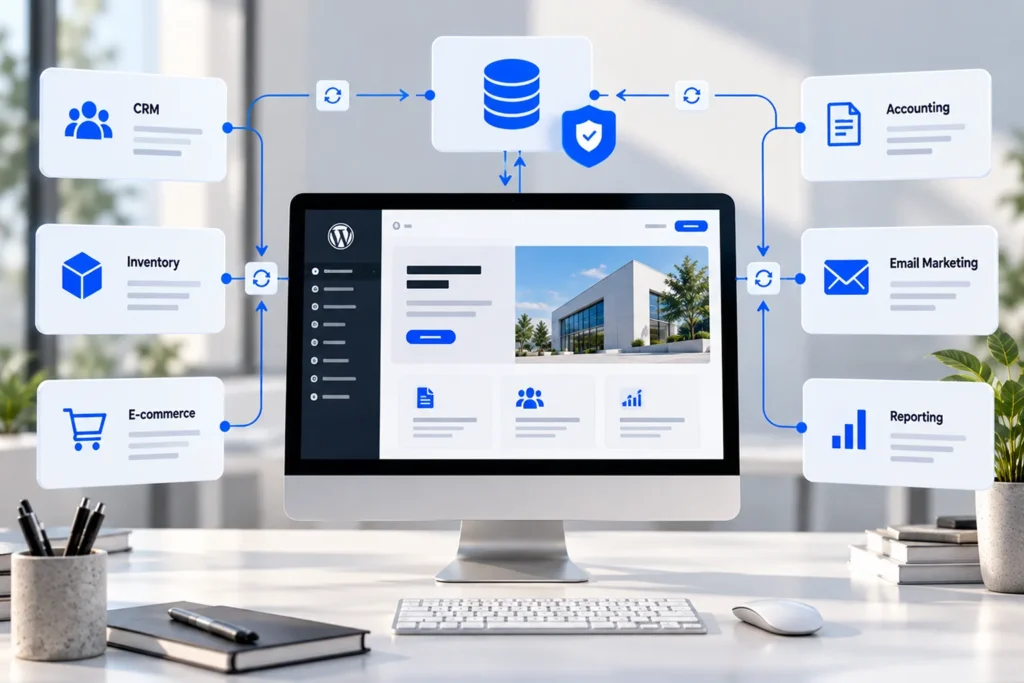
For growing businesses, it may also involve improving how the website connects to internal systems, such as inventory management, customer relationship management, or automated communication.
When these foundations are already in place, campaign preparation becomes more focused.
Instead of spending most of the available time repairing technical problems, the business can concentrate on the offer, messaging, and customer experience.
Better Sales Campaigns Start With Better Preparation
A successful sales campaign is the result of several connected decisions.
The offer needs to be relevant, the messaging needs to be clear, and the website must support the customer throughout the journey.
Starting early provides the time required to develop those elements properly. It also creates opportunities to test functionality, evaluate performance, and resolve issues before increased traffic makes them more expensive to address.
There is no guarantee that preparing several months in advance will produce a particular increase in sales. Results still depend on the strength of the offer, market conditions, customer demand, and the quality of the overall marketing strategy.
However, a well-prepared website removes avoidable obstacles and makes it easier to understand campaign results.
If your business is planning a seasonal promotion, product launch, or important marketing campaign, consider involving your website development partner while the strategy is still being defined.
At Designite, we help businesses develop and improve WordPress websites, build custom functionality, and implement integrations that support their operations.
Planning an upcoming campaign? Discuss your website requirements with Designite and identify what needs to be ready before launch.